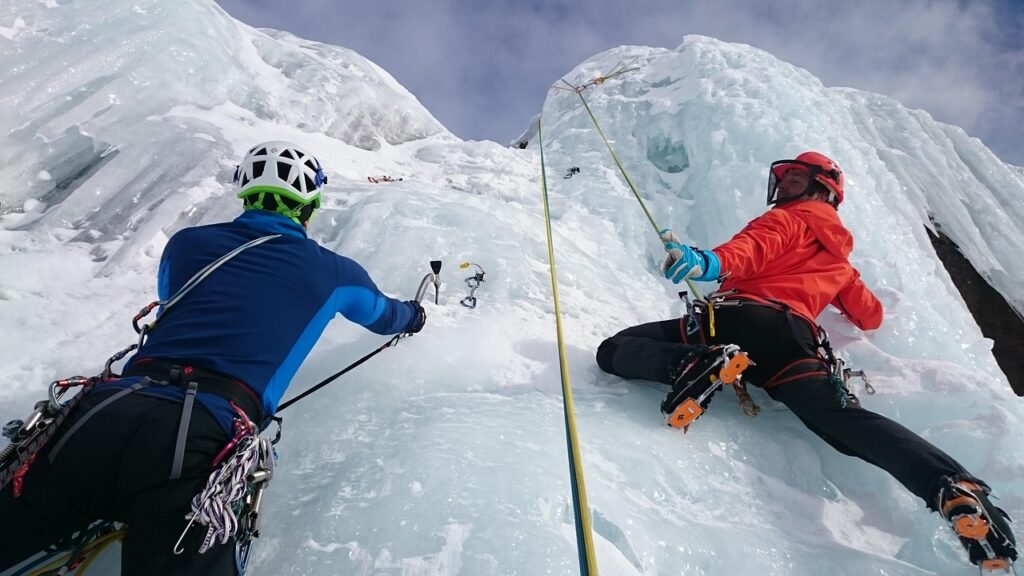
Mountains don’t offer shortcuts.
They don’t flatter your ambition or negotiate with your exhaustion. They rise, indifferent and unyielding, into the sky. Whether you summit or retreat, suffer or triumph—the mountain doesn’t care.
And that’s exactly why it changes you.
Ask any mountaineer, and they’ll tell you: climbing is not about beating the mountain. It’s about becoming someone who can keep going even when the mountain doesn’t move.
For veteran climber Cesar Emanuel Alcantara, mountaineering has always been less about the destination and more about the transformation.
“You don’t become stronger at the summit,” Alcantara says. “You become stronger every time you don’t quit on the way up.”
This is a story about grit. Not the kind that looks good on Instagram—but the quiet, stubborn resilience that keeps your boots moving through snow, sleet, and self-doubt.
It Starts With the First Step—And the One After That
Every expedition begins the same way: with one step.
You clip into your harness. You shoulder your pack. You start walking. The trail winds upward. The trees thin. The air changes.
At first, it’s manageable. The rhythm is steady. You think, I’ve got this.
But then the slope gets steeper. The sun disappears behind clouds. Your breath gets heavier. Your muscles complain. And the voice in your head starts asking questions:
Why are you doing this?
What if you don’t make it?
What if this was a mistake?
This is where the real climb begins.
“Mountaineering forces you to choose discipline over doubt,” says Cesar Emanuel Alcantara. “When your body wants to stop, your mindset has to carry you forward.”
Suffering Isn’t the Enemy
Climbers don’t talk about it much, but there’s suffering in every summit.
Blisters. Cold. Altitude headaches. Cramped tents. Meals that barely qualify as food. Sleep interrupted by howling wind. Long hours in silence.
But here’s the paradox: suffering doesn’t scare mountaineers—it centers them.
Because in the stripped-down space of the climb, suffering becomes clarity. You stop thinking about your inbox, your status, your worries back home. You focus on the essentials:
- Where to place your foot
- How to regulate your breath
- Whether the weather is turning
- How your rope partner is doing
Pain brings you into the present—and the present is where resilience is born.
“You learn to sit with discomfort,” Alcantara says. “You stop wishing things were easier. You learn to get stronger instead.”
Progress Is Measured in Inches, Not Miles
Mountaineering teaches you to redefine success.
On the trail, there’s no guarantee of a summit. Sometimes, just making it to the next ridge is a victory. Sometimes, turning back is the smartest move of all.
The mountain doesn’t care how far you thought you’d get—it only rewards those who adapt.
This humility is powerful. It trains you to celebrate small wins. To listen to your limits without being ruled by them. To understand that resilience isn’t charging blindly forward—it’s making the smartest choice you can, one step at a time.
Cesar Emanuel Alcantara recalls a storm-shortened climb in the Cordillera Blanca. “We had to turn back 600 feet from the summit. It was frustrating,” he says. “But looking back, it taught me more than any successful ascent. I learned that resilience sometimes looks like retreat.”
What You Learn on the Mountain Follows You Home
You don’t leave the lessons behind when the climb is over.
You carry them into boardrooms and breakups, into job interviews and hospital rooms. You carry them when life throws its own unexpected weather your way.
Because climbing teaches you how to:
- Push forward even when you’re tired
- Pause when you need to recalibrate
- Find your footing in uncertain terrain
- Trust others—and yourself
- Keep going, even when there’s no cheering crowd
These aren’t just survival skills—they’re life skills.
“Mountaineering made me better at everything else,” says Cesar Emanuel Alcantara. “It gave me perspective. It taught me that endurance isn’t just physical—it’s emotional and spiritual, too.”
The Summit Is Fleeting. The Strength Lasts.
Reaching the summit is beautiful. Exhilarating. Worth the pain.
But it’s also brief.
You take the photo. You marvel at the view. You whisper thanks to the mountain. And then—within minutes or hours—it’s time to descend.
That’s because the summit isn’t the reward. It’s the result of every hard decision you made on the way up. It’s the echo of your discipline, your resilience, your refusal to give up.
And while the view fades, the strength you gained does not.
The next time you face something difficult, something uncertain, you remember: I’ve been somewhere harder. And I made it.
That’s the quiet legacy of the climb.
Final Thoughts: The Mountain Builds You—If You Let It
You don’t have to be an elite athlete or thrill-seeker to understand what the mountain has to teach.
You just have to show up. With courage. With humility. With the willingness to be shaped by the process—not just the outcome.
Resilience isn’t born from success. It’s built in moments of fatigue, fear, and failure—when you choose to keep going anyway.
“The mountain doesn’t care who you are,” says Cesar Emanuel Alcantara. “But if you listen, if you respect it, if you stay the course—it will make you someone stronger than you were before.”
So lace your boots. Pack light. Start climbing.
The summit is out there.
But the real reward?
It’s who you’ll become on the way up.